After the storm passes
- Stay away from downed power lines and call Sawnee EMC or Georgia Power for lines on the ground.
- If a tree is on the house, stay out of the rooms under it.
- Put buckets under drips and poke a small hole in a ceiling bulge to let the water drain into a bucket in a controlled way, rather than letting the ceiling come down.
- Take photos of the outside of the house, the roof if you can see it from the ground, and every room with water.
- Call your insurer to open a claim, then call us to get a crew started on the inside.
Many restoration companies can tarp a roof or board up a broken window the same day, which keeps the next storm from making it worse.
What the crew handles
Storm jobs usually mean water in more than one place: soaked attic insulation, wet ceiling drywall, carpet below, and sometimes a basement that took on runoff at the same time. The crew removes what cannot be saved, dries the framing and floors, and documents everything for your adjuster.
Water from outside that came across the ground, like runoff through a basement door, can carry mud and bacteria. Crews treat that differently from clean water out of a supply line.
Have this ready when you call
- What is leaking, if you know: a supply line, the water heater, a toilet, the roof, a crawl space or a drain.
- Whether the water is clean or looks and smells like sewage.
- Which rooms and floors are wet, including the crawl space or basement, and about how long it has been wet.
- Whether the main water valve is off and the power to wet rooms is off.
- Your road or subdivision in Cumming or Forsyth County, so a crew close to you picks up.
Most calls take a couple of minutes. Stay on the line and you will be matched with a local company that can send someone out.
Free to call. You are not signing up for anything.
Storm water problems around Cumming and Lake Lanier
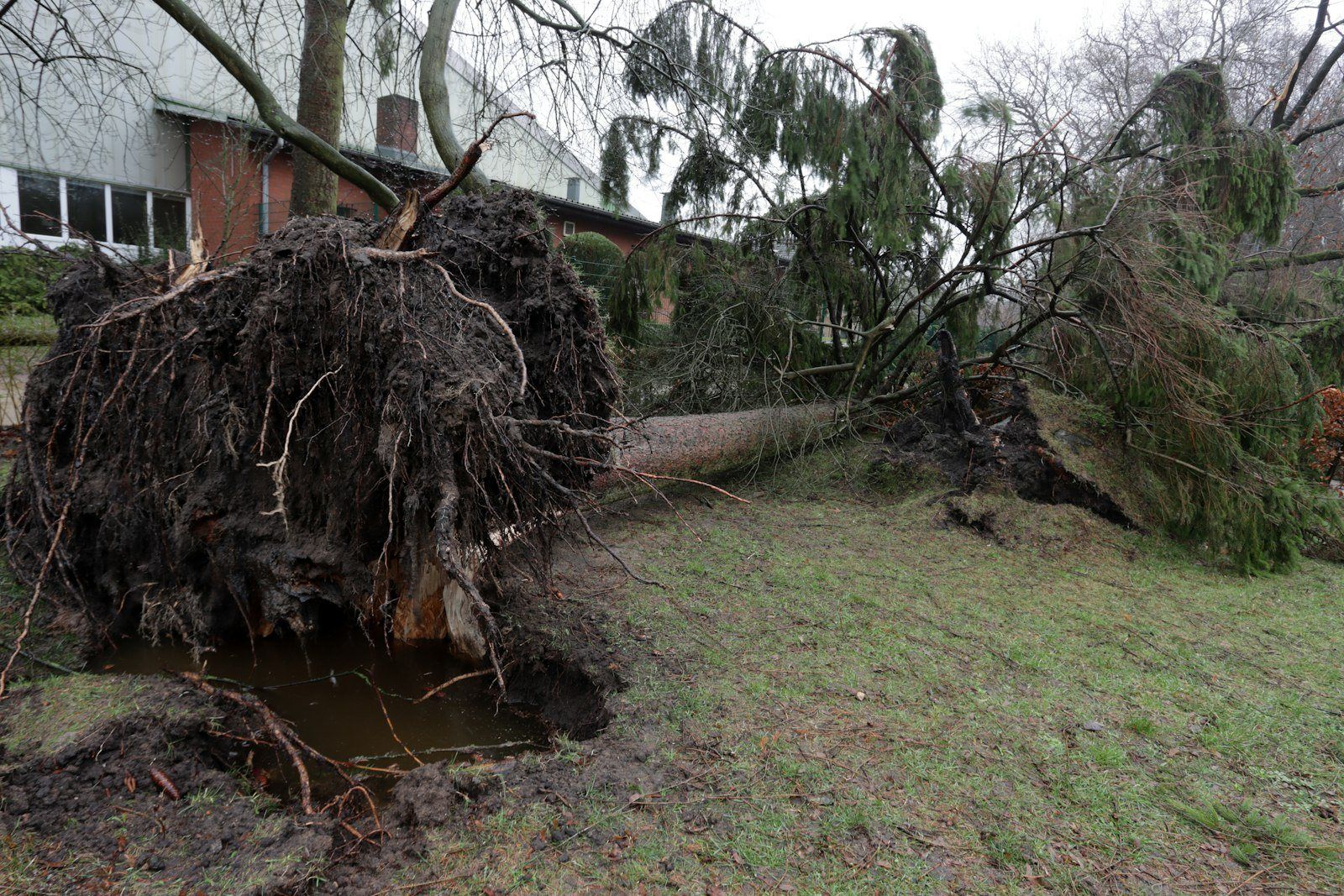
Cumming sits in a part of Georgia that gets strong summer thunderstorms and, every few years, the leftovers of a tropical system moving up from the Gulf. Those storms bring short bursts of very heavy rain and gusty wind. Forsyth County is full of tall pines and hardwoods, so the most common storm call is not rising water. It is a limb or a whole tree on the roof, followed by rain coming through the hole.
Heavy rain on hilly lots causes the second kind of call. Runoff from the street or the house uphill can overwhelm a yard drain and push water against a basement wall or under a walkout door. Gutters full of pine needles and oak leaves overflow and dump water next to the foundation, which is a common way terrace levels get wet.
Homes near Lake Lanier have their own exposure. The lake is managed by the Corps of Engineers and rarely rises into houses, but lakefront lots slope steeply, get the full force of wind across the water, and often have lower levels set into the hillside.
When it rains hard enough to flood roads around Cumming, crews get busy fast. Calling early gets you on the list sooner, and a tarp on the roof or water pumped out of a basement the same day can save a lot of drywall and flooring.